
You are using an out of date browser. It may not display this or other websites correctly.
You should upgrade or use an alternative browser.
You should upgrade or use an alternative browser.
Critical PHP updates
- Thread starter ju5t
- Start date


Thank you! Succes, en sterkte, as we would say in DutchWe will be releasing patches for older PHP versions and a fix for PHP 8.1 compilation soon. We have them working but still running some tests.


Kiekeboe100
Verified User
Anybody having issues with imagick? It seems to compile, but stay visible as an update in custombuild, and wordpress complains it's not available.
Error: Failed to download metadata for repo 'epel': Cannot download repomd.xml: Cannot download repodata/repomd.xml: All mirrors were tried
executing 'dnf --quiet --assumeyes install gcc-c++ make autoconf pkgconfig openssl-devel systemd-devel krb5-devel libcurl-devel libpng-devel freetype-devel libwebp-devel libjpeg-devel libxslt-devel libsodium-devel libicu-devel sqlite-devel oniguruma-devel libffi-devel libtool-ltdl-devel libzip-devel' failed (attempt 1/3)
Error: Failed to download metadata for repo 'epel': Cannot download repomd.xml: Cannot download repodata/repomd.xml: All mirrors were tried
executing 'dnf --quiet --assumeyes install gcc-c++ make autoconf pkgconfig openssl-devel systemd-devel krb5-devel libcurl-devel libpng-devel freetype-devel libwebp-devel libjpeg-devel libxslt-devel libsodium-devel libicu-devel sqlite-devel oniguruma-devel libffi-devel libtool-ltdl-devel libzip-devel' failed (attempt 2/3)
It's legacy license

Scan your logs
Code:
zgrep -hiE 'php2shell|109618|109619' \
/var/log/nginx/domains/*.log* \
/var/log/httpd/domains/*.log* 2>/dev/null
Code:
zgrep -hiE 'auto_prepend_file|php://input|allow_url_include' \
/var/log/nginx/domains/*.log* \
/var/log/httpd/domains/*.log* 2>/dev/nullWere you able to download it? There’s nothing new in my yum.So far, CloudLinux have finished basically 1x version for many distros - PHP v7.4.
Thanks, what should I do now.Scan your logs
Code:zgrep -hiE 'php2shell|109618|109619' \ /var/log/nginx/domains/*.log* \ /var/log/httpd/domains/*.log* 2>/dev/null
Code:zgrep -hiE 'auto_prepend_file|php://input|allow_url_include' \ /var/log/nginx/domains/*.log* \ /var/log/httpd/domains/*.log* 2>/dev/null
149.102.239.83 - - [21/Oct/2026:14:27:52 +0200] "GET / HTTP/1.1" 301 4861 "-" "php2shell-checker/3.0 (authorized-scan)"
149.102.239.83 - - [21/Oct/2026:14:27:52 +0200] "GET / HTTP/1.1" 200 46619 "-" "php2shell-checker/3.0 (authorized-scan)"
149.102.239.83 - - [21/Oct/2026:14:27:53 +0200] "POST / HTTP/1.1" 200 46852 "-" "php2shell-checker/3.0 (authorized-scan)"
213.152.161.54 - - [21/Oct/2026:13:34:50 +0200] "HEAD / HTTP/1.1" 200 4832 "-" "Mozilla/5.0 (Windows NT 10.0; Win64; x64) AppleWebKit/537.36 php2shell-probe"
213.152.161.54 - - [21/Oct/2026:13:45:35 +0200] "POST / HTTP/1.1" 200 99124 "-" "Mozilla/5.0 php2shell-sidfix"
You're absolutely right, and I completely agree. However, these servers won't be in use much longer, so upgrading the OS isn't really worth the time and effort.I don't want to be rude, but seriously, CentOS 7 is so outdated that you could do already an in-place upgrade to Almalinux.
I'm just looking for a temporary way to keep PHP patched and secure in the meantime.
We have heard that it has not been fully patched. Does anyone have more information on whether this is real and correct?, see below.
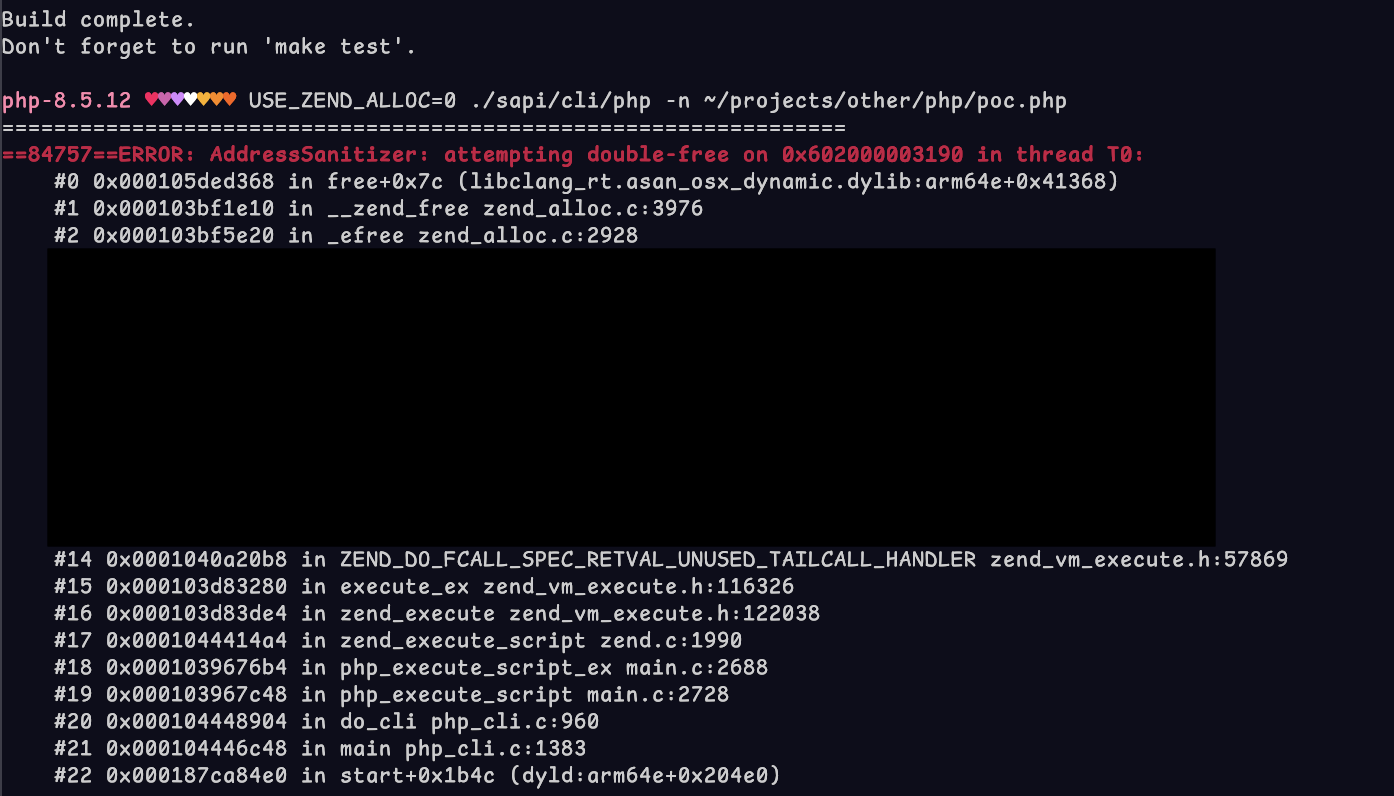


Looks like a separate memory bug, not yet fixed, that a specific PHP function triggers when a script calls it in a certain way. It isn't shown to be reachable through a simple web request.We have heard that it has not been fully patched. Does anyone have more information on whether this is real and correct?, see below.